

I am interested in knowing how things work, and football is highly structured and extensively measured, and that makes learning about it a matter of hard work and not innate genius. With the right books, the right websites, and time, you can get a clear picture of what’s going on.
The NFL Draft, however — that is a horse of a different color. Body measurements, professional analysis, comparisons across time and space; and yet year after year, teams make mistakes, over and over and over and over again. Some of them are obvious mistakes, made by those desperate to keep their jobs; those are not worth examining, as anybody whose had a bad boss can figure those out. The less obvious mistakes are far more interesting.
This article is part one of a longer series, in which I try to design a system that is directionally correct on upcoming players but not necessarily laser-precise.
* * * * *
I have created a very simple evaluation criteria that I call Five by Five (5/5). It examines an upcoming draftee on five metrics:
- PFF overall grade
- NFL Combine athleticism score
- High school star ranking
- PFF primary skill rating
- Weighted schedule using Jeff Sagarin rankings
A player can score higher than 5/5. A 4* rating gets you one point, but a 5* rating gets you two; a PFF overall grade of 82 can get you one point, but 90+ gets you three and maybe even four. The higher the score, the better the player.
I then add a final piece — this is purely speculative, purely my own analysis and gut reaction. There is a sound logic and analysis behind it, but at the end of the day, I am simply adding a plus, a minus, or an equal sign to say that my gut is telling me this player is likely to be good, bad, or unsure.
As a quick explainer on #5 — I use Jeff Sagarin’s rankings on college football teams to determine which is a Good, Bad, or Mediocre team.
- 1-30 is considered Good
- 31-45 is considered Mediocre
- 46+ is considered Bad
- 100+ ranked teams get an extra penalty
I then use the PFF player ranking for that game and adjust it up or down depending on the strength of competition.
The player production rankings are
- Elite (90+)
- Pro Bowl (85-89.9)
- Starter (70.0 -84.9)
- Back Up (60-69.9)
- Replaceable (0-59.9)
Is this super-precise? No. But we’re not going for precise — we’re going for directionally accurate.
An Example:
- John Doe played North State and had a 96 Production rating. North State is ranked 106 by Jeff Sagarin. A 96 production score would normally rank out as Elite; but being above a 100 means I knock it down two levels to simply Starter.
I have no idea if this is a good system; it probably isn’t. I don’t have a background in statistics or math and the 5/5 is as much instinct as analytics. However, I am not trying to hit the bullseye and figure out to the decimal point how good a player will be; I am only trying to figure out a simple method of making a choice, one way or another.
Many will disagree with the usage of PFF or Jeff Sagarin or any other piece of the 5/5 — that is perfectly fine, and I take no offense to disagreement. This piece will serve as an experiment — I will look back on this after the rookie years of the upcoming NFL draftees and see if anything I saw was born out. I want to be right, of course, and I want my system to work — but I want to learn, first and foremost, and these are the variables I want to explore.
* * * * *
Having said all of that, let’s take a look at at player that didn’t live up to his potential, and that my 5/5 system would’ve red-flagged.
Solomon Thomas is a defensive lineman who plays for the New York Jets. He was originally drafted by the San Francisco 49ers fourth overall as a defensive end in 2017. According to Pro Football Focus, he has been a replacement-level or worse player his entire career.
Here’s how he stacks up by the 5/5:
- 89.1 PFF Production Rating [1]
- 89 NFL Combine athleticism [1]
- 4 Star HS ranking [1]
- 76.2 Primary Skill Rating (Pass Rush) [0]
- 0 Rating for Weighted Schedule [0]
Gut Reaction: = [unsure]
TOTAL: 3/5 =
What this says to me is that we’ve got a highly productive, highly athletic player with a good pedigree who is curiously mediocre at his primary skill and who didn’t fair that well when weighting for competition.
This does not encompass the fullness of Solomon Thomas as a player or person — again, we’re going for directionally accurate, and 5/5 gets us there.
Let’s do another one:
Ed Oliver
- 93.4 PFF [2]
- 91 athleticism [2]
- 5* [2]
- 91.1 Primary Skill [2]
- -3 W-Schedule [-2]
Gut Reaction: — [Bad]
TOTAL: 6/5 —
Ed Oliver, according to 5/5, is insanely athletic, insanely productive, insanely skilled, with an Elite pedigree. He played one of the worst schedules I have ever seen, as well as only playing in eight total games the entire season.
Bad competition would give anyone pause. However, I almost certainly would’ve drafted him in the top ten, just as he was in real life. Why? Because good players are productive and skilled against bad teams and athleticism doesn’t care about competition. He plus’d on the 5/5 scale. He should’ve been a hit. The only red flag was bad competition.
One more:
Jalen Reagar
- 69.2 PFF [-1]
- 78 athlete [-1]
- 4* [1]
- 67.1 Prime Skill [-1]
- -8 W-S [-3]
Gut Reaction: —
TOTAL: -5/5 —
This one baffles me, because by my crude system it’s clear that he’s not a first round draft pick. Back-up level production, a mid-tier Starter athlete, a good pedigree, a Back-up level Primary Skill, and a genuinely horrific rating on his weighted schedule.
If you look at his profile on the NFL Combine, they have their own grade for his potential, and it’s “Will Eventually be a Plus NFL Starter”. How did they miss this badly?
I could go on with more players, but one of the commonalities that I see in players that don’t pop is a mediocre or poor rating when you factor in strength of schedule. This is not news — this is probably the most obvious thing to look at in the world of player analysis.
Anyway, I think that’s enough. Let’s take a look at some players in this upcoming draft.
* * * * *
Below are the first five players on most NFL Draft Big Boards. I’m doing the usual 5/5 analysis with Gut Reaction and adding Green and Red Flag examinations. I finish each profile with a small Analysis giving my full thoughts on them, their future, and draft position.
Here we go:
Travis Hunter

Colorado // Wide Receiver/Cornerback
- 86.3 Offense/88.2 Defense
- 92 athlete
- 5*
- 89/90.3 Prime Skill
- +1/-3 Weighted Schedule
Gut Reaction: + Offense / = Defense
TOTAL: 7/5+ / 6/5=
Analysis: Whatever nerves I might have from the Weighted Schedule score are mollified by his work ethic and athleticism. I would bet on his success.
Abdul Carter
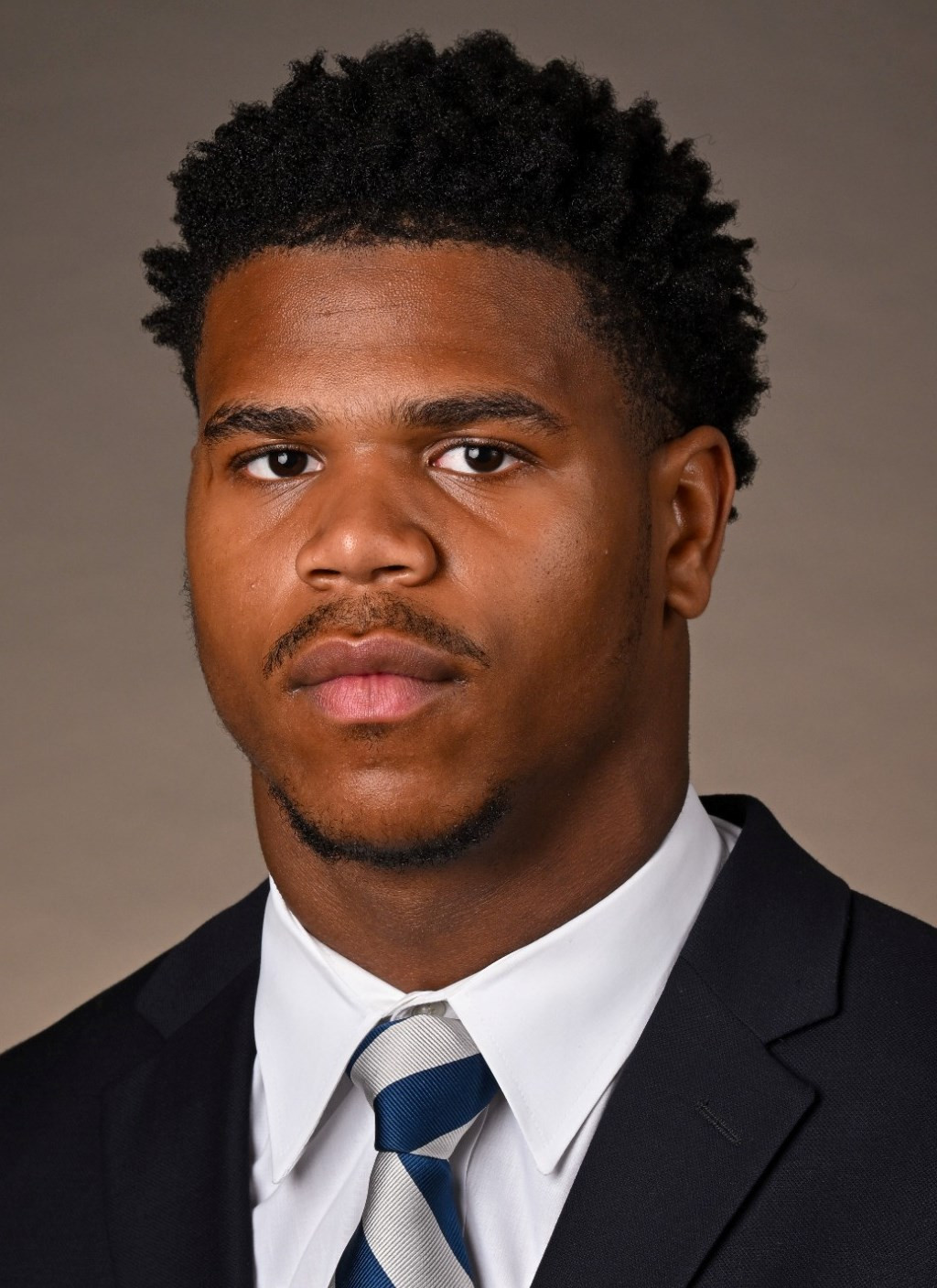
Penn State // Edge
- 91.3
- 90
- 4*
- 92.4
- +15
Gut Reaction: +
TOTAL: 9/5+
Analysis: If injuries don’t get him, I think he could be a star.
Tetairoa McMillan

Arizona // Wide Receiver
- 84.8
- 81
- 4*
- 85.8
- +4
Gut: +
TOTAL: 5/5+
Analysis: I think he might be a good #2 receiver but I am not sure about him being a #1.
Mason Graham

Michigan // Defensive Tackle
- 91.1
- 77
- 4*
- 81.1
- +14
Gut: +
TOTAL: 6/5+
Analysis: I am reminded of Travis Frederick, a center for the Dallas Cowboys, who was dinged for not being a great athlete and yet was the greatest center of his generation. Long story short, I would bet on Mason Graham succeeding.
Ashton Jeanty

Boise State // Running Back
- 94.9
- 83
- 4*
- 96.6
- -11
Gut: =
TOTAL: 5/5=
Analysis: In the debate about whether Jack Nicklaus or Tiger Woods is the best golfer of all time, perhaps the most persuasive argument is that Jack Nicklaus won his trophies against much worse competition than Tiger won his. I have thought about this a lot with Jeanty. In truth, I am genuinely not sure which side I fall on with him. My heart tells me that he will be great — my brain isn’t so sure.

 fbstudy.com
Leave a reply to The 2025 NFL Draft Big Board Cancel reply